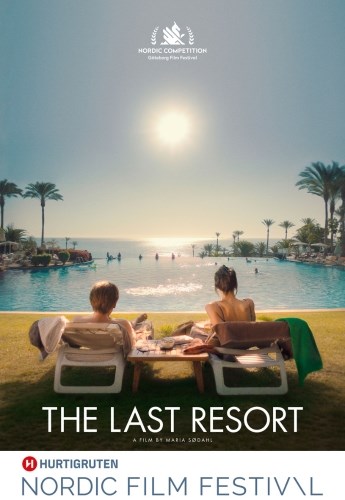
The Last Resort - Nordic Film Festival
Click here if you liked this article 3 
https://nordicfilmfestival.com.au/
Date Reviewed: 02/07/2026
What makes The Last Resort so effective is its refusal to become a straightforward morality tale.
Maria Sødahl uses the resort as far more than a picturesque holiday destination. It becomes a powerful metaphor for privilege: a carefully curated environment that is comfortable, predictable and controlled, where the unsettling realities beyond its boundaries are easy to ignore. Within the resort, an almost unreal version of normality has been constructed, allowing its guests to believe they are insulated from the world's complexities.
When that illusion is disrupted, the film begins asking its most compelling questions—not simply about what the characters will do, but about who they really are when comfort and conscience collide.
Esben Smed and Danica Ćurčić deliver beautifully restrained performances as a couple whose confidence in their own generosity is gradually tested. Their responses feel recognisably human rather than exaggerated, capturing how uncertainty, fear and self-preservation can slowly reshape even the best intentions. Sødahl has described the film as one that invites audiences to examine themselves as much as its characters, and that invitation is one of the film's greatest strengths. The inclusion of several non-professional actors with lived experience of displacement adds further authenticity, grounding the story in perspectives that never feel tokenistic or symbolic.
As the family's carefully constructed sense of security begins to fracture, The Last Resort becomes an examination of the fragility of identity itself. The film explores the stories we tell ourselves about being compassionate, generous and morally good, before asking how resilient those identities remain when confronted by uncertainty. It quietly interrogates privilege and perspective, revealing how easily empathy can become complicated by fear, self-interest and the instinct to protect what we believe is ours.
Perhaps the film's greatest achievement is that it never offers an easy emotional anchor. Sympathy naturally lies with the refugee, whose circumstances remain undeniably precarious, yet the screenplay introduces enough ambiguity to reflect the uncertainty the family experiences. Rather than manipulating the audience, it asks us to sit with our own assumptions and consider how quickly confidence in our moral judgement can give way to hesitation.
Running beneath these moral questions is what feels like the film's central thematic concern: an exploration of exploitation in its many forms. Whether economic, emotional or interpersonal, exploitation surfaces repeatedly in subtle ways, revealing itself within relationships as much as broader social structures. Even moments of intimacy carry an undercurrent of imbalance, suggesting that human connection itself can become transactional when shaped by power, desire or vulnerability. These quieter moments deepen the film's examination of the often-hidden costs of empathy, exposing how compassion can coexist with self-interest in uncomfortable ways.
That lingering uncertainty becomes the film's most powerful takeaway. It isn't simply about whether the family makes the right choices, but about how easily compassion becomes entangled with fear, obligation and self-preservation. Sødahl leaves those questions deliberately unresolved, encouraging reflection long after the credits roll.
The Last Resort is an intelligent, quietly affecting film that trusts its audience enough not to provide simple conclusions. Instead, it opens up a thoughtful conversation about empathy, privilege, exploitation and the complex moral narratives we construct about ourselves. It lingers not because it tells us what to think, but because it asks us to reconsider what happens when our carefully curated lives collide with realities we can no longer keep at a comfortable distance.
Reviewed by Vivien Lynch