Sofia’s Suspicion: A Cold War Thriller Lost in the Fog of Its Own Secrets
Click here if you liked this article 2 
https://www.palacecinemas.com.au/movies/spa26-sofias-suspicion
Date Reviewed: 12/06/2026
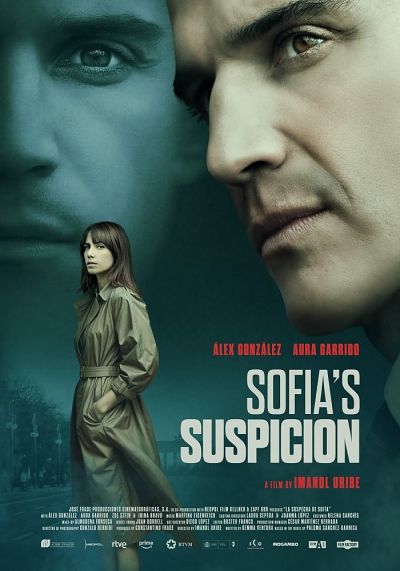
Imanol Uribe’s Sofia’s Suspicion, screening as part of the HSBC Spanish & Latin American Film Festival, adapts Paloma Sánchez-Garnica’s novel into a 100-minute spy thriller set against the ideological battleground of Cold War Spain and Germany. The film depicts the tension, deception and the extreme lengths individuals will go to for survival but the final delivery is a decidedly mixed.
The title for those who have not read the book is somewhat misleading, as the narrative focuses less on Sofía (Aura Garrido) and more on Klaus (Álex González in a dual role), the long-lost twin brother of Sofía’s husband, Daniel (also González). Tasked by the KGB to infiltrate Daniel’s life, a brother unaware of his very existence, Klaus must observe, study and ultimately replace him. Uribe’s direction initially excels at immersing us in Klaus’s precarious mindset. Early scenes, framed through Klaus’s camera lens, employ tight close-ups that survey Daniel’s domestic life with an unnerving intimacy. The click of the camera puts us in the position of the spy also. The stakes are established clearly: Klaus’s own family is threatened by state security, forcing him to question whether he can successfully pull off the identity swap.
However, the film’s narrative structure quickly becomes its own worst enemy. Uribe jumps across time and place, leaving crucial context particularly regarding Daniel’s upbringing frustratingly opaque. Audiences may find themselves disoriented in the first half, struggling to build empathy for characters before the story flashes back to escape attempts or leaps forward to new locations that lack an clear purpose. While one might argue this fractured rhythm is intentional, mirroring the paranoia and confusion of the Cold War era, it undermines the film’s emotional accessibility. For viewers without a firm grasp of this historical period, the disorientation will likely detract from basic enjoyment.
Once Klaus, under strict KGB orders, assumes Daniel’s identity fooling his wife, children, mother and colleagues, the film reveals his hidden motivation: protecting a sister he loves. This ethical wrinkle adds welcome depth. Yet even here, the screenplay shortchanges the central relationship. The potential for a gripping espionage thriller, one that pits ideological duty against familial love is consistently high. Regrettably, the pacing drags a touch and despite committed, often excellent acting from González and Garrido, the key confrontational moments land with a dissatisfying emotional thud. The film lacks the necessary contextual build to make its climactic betrayals or revelations resonate.
In conclusion, Sofia’s Suspicion is a film of admirable ambition, anchored by a strong dual performance from Álex González. Yet it remains a thriller too often at war with itself with its timeline and underdeveloped emotional core prevent the suspense from ever fully igniting. For dedicated spy genre fans or those intimately familiar with the era, there are flickers of intrigue worth uncovering. But general audiences seeking a tightly wound, character-driven drama may leave feeling that the film’s secrets are less gripping than simply incomplete.
Reviewed by Sandra Lee