Sapiro v. Ford: The Jew Who Sued Henry Ford | Jewish International Film Festival
Click here if you liked this article 2 
https://www.jiff.com.au/films/sapiro-v-ford-the-jew-who-sued-henry-ford
Date Reviewed: 24/10/2026
Reviewed by Mary Sinanidis
Aaron Sapiro’s case against Henry Ford was courageous. Sapiro v. Ford: The Jew Who Sued Henry Ford tells his story in a style that feels dated.
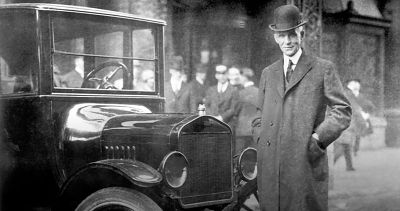
The documentary, featured as part of the Jewish International Film Festival, recounts an extraordinary David-and-Goliath confrontation. Sapiro, a Jewish lawyer and advocate for farmers’ cooperatives, took on one of America’s most powerful men over the antisemitic conspiracy theories published in Ford’s Dearborn Independent.
Ford’s wealth and fame gave his words immense influence. One article accused a “band of Jews” of being “on the back of the American farmer”, casting Sapiro’s work organising cooperatives as part of a Jewish plot to control agriculture. The newspaper and the books that followed spread this conspiracy theory widely. Its echoes in modern life give the film’s subject lasting relevance.
Sapiro’s lawsuit was a bold response, but it came at great personal and professional cost. “I felt it was time for someone to stop Mr Ford,” he says in words performed by Ben Shenkman, chosen to speak as Sapiro rather than about him.
The actor speaks directly to camera rather than appearing in a conventional dramatisation. The approach gives Sapiro a personal presence, but can also be confusing: at times, it is unclear whether we are watching Sapiro’s story or a modern actor presenting it. Shenkman said Sapiro’s faith in the American promise, and his willingness to challenge a powerful man who seemed to believe he “owned the truth”, drew him to the role.
Experts and archival material trace Sapiro’s life from a difficult childhood to his work organising farmers. The film links Ford’s propaganda to the continuing struggle against prejudice and hate speech, but that connection could have been stronger. Contemporary footage might have made the modern parallels more vivid; instead, they are mostly suggested. The shifts between Shenkman’s performance, archival material and expert interviews can also make it difficult to follow who is speaking and when.
Director Gaylen Ross brings substantial documentary experience to the subject. Her work includes Killing Kasztner: The Jew Who Dealt With Nazis, Dealers Among Dealers and the co-directed documentaries Beijing Spring and Ximei. Producer Carol King, a longtime women’s rights advocate and public policy campaigner, has spent many years developing and producing factual programming. Their experience is evident in the depth of the historical material, even if the film’s style feels at odds with a story that remains urgent.
The trial’s outcome was more complicated than a simple victory. It ended in a mistrial, followed by a settlement and an apology to America’s Jews drafted by American Jewish Committee president Louis Marshall. Ford’s apology helped bring the Dearborn Independent to an end, but Sapiro’s own career and finances suffered. The apology even inspired a popular song that mocked Ford: its refrain celebrated being “just as good as you” since “Henry Ford apologised to me”. The film’s most affecting point is that justice can be partial and still matter.
The filmmaking does not always do justice to this remarkable story of courage and resistance. But the history deserves to be heard, and the film may send you looking to learn more about both Sapiro and Ford.
Highlights
- A powerful story that deserves to be told.
- Sapiro’s personal courage and the cost of his case.
- A reminder to consider what might have happened if Sapiro had not challenged Ford.
- A timely look at how conspiracy theories shape public life.
Who’s it for?
- History buffs.
- Ford owners curious about the company’s history.
Pro-Palestinian activists, and anyone who sees themselves as opposing injustice, who are willing to consider how antisemitic ideas can surface in political rhetoric