Peter Houghton's 'Homecoming': Parenthood, Pinter and the pleasure of not knowing
Click here if you liked this article 2 
https://homecomingplay.com.au/
Date Reviewed: 15/09/2026
Peter Houghton’s stage career could fill this entire article. It includes acting, writing and directing across Melbourne Theatre Company, Malthouse Theatre and the Australian Shakespeare Company, but Peter wears it lightly. He is approachable, funny and unusually willing to admit when a role has got the better of him.
We speak by phone about Harold Pinter’s 'The Homecoming', performed at the Athenaeum from 17 September. At first I expect a brisk interview. Over an hour later we are still talking: about audiences, children, director Peter Greenaway, what we thought of Fabio Motta’s ‘Holy Fool’ and all things art. By the end, Houghton wants to know how I came to write about theatre (but that's another interview for another time).
There is no grand performer’s pose here. He is not afraid to let himself look uncertain. It is a useful quality for an actor playing Teddy, the philosophy professor who returns from America with his wife Ruth to the combative family home he left behind.
What still shocks us?
Pinter’s The Homecoming premiered in 1965. Houghton, who had never acted in a Pinter play before, thinks its status as a classic obscures just how strange and confronting it remains.
“There are no swear words in The Homecoming,” he points out. “But the concepts that are being played with, the plot, are pretty out there.”
The household Teddy enters is dominated by men. As his family begins to bargain over Ruth, questions gather around the couple: why does Teddy allow this, and what does Ruth want? Houghton says a contemporary audience might recognise “toxic masculinity”, but Pinter refuses to make Ruth merely its victim.
“The thing that rescues it from being completely toxic patriarchy is that she has a lot of agency in that situation,” he says. “She’s the ultimate winner, I think. She takes the reins.”
Houghton is interested in what audiences will do with the play’s discomfort. He says independent theatre can still be bold, but mainstream companies, facing financial risk, often become cautious.
“It’s actually put its training wheels back on. It’s sandpapered its edges down a little bit, and I understand why. You can lose your shirt if you’re doing theatre.”
For him, staging Pinter now is a test of our appetite for difficult work. “My guess is actually that people will be quite stunned by how edgy” the play remains.
He and fellow cast member Richard Piper have discussed how attitudes to controversy have shifted. Piper, Houghton recalls, was a young artist when the play appeared; what might once have been welcomed as provocative now meets audiences more alert to the harm behind certain behaviours. Houghton acknowledges the reasons for that change. He does not suggest that audiences should stop questioning what they see, only that theatre needs room to make them question.
Teddy does not make it easy
Houghton’s first attempt to understand Teddy was almost too reasonable. He approached the role naturalistically, looking for a convincing motive beneath every decision.
“I got to a point where I became frustrated with the play,” he says. “I thought, ‘This is just not feasible.’ I wouldn’t just sit there and put up with it.”
Then he began to see Teddy’s detachment as part of the disturbing action, not an obstacle to explaining it. The men exert power in different ways; Teddy’s is intellectual.
“They were all using different forms of violence; in my case, a kind of emotional detachment,” Houghton explains. Teddy uses his “intellectual armour as a defence against the indefensible”.
Director and designer Greg Carroll distinguishes naturalism from a more muscular realism. For Houghton, the work began to open when he stopped trying to make each response resemble ordinary domestic behaviour.
“Realism has more muscle,” he says. “It’s probably closer, in a way, to classical, closer to Greek or Shakespeare. When you bring that muscle to it, and that form, and that severe architecture to it, it gets easier to play.”
Easier is not the same as resolved. Carroll has a theory about why Teddy brings Ruth back to the home he escaped: perhaps Teddy already senses she cannot fit into the academic life he has constructed in America. Houghton finds it plausible, but resists treating it as the answer.
“Normally I would have nailed down every single psychological question,” he says. In this rehearsal room, “I’m quite unclear about a lot of motivations in the play.” He laughs. “To be completely honest, I’m swapping chairs almost every day.”
We both laugh. That candour is refreshing. A long career has not persuaded Houghton to pretend he knows everything about the man he plays.
The audience gets the pen
Pinter’s silences have a reputation of their own. How do actors keep a pause charged instead of making it look, as Houghton jokes, as though “someone has forgotten their line”? Dot, dot, dot...
He talks about the rhythm of the writing and the difference between a pause and a silence. More importantly, he speaks about what Pinter declines to supply: a set of instructions telling the actors, or the audience, what every glance means.
“There’ll be ambiguity everywhere. There’ll be work for you to do in the audience,” he says. “Like a lot of good dramatists, he sort of gives the pen to the audience and says, ‘You write the sentence. You fill in the gaps.’”
On a train home from rehearsal, Houghton and one of his daughters watched a fellow passenger scroll through short videos. She just kept scrolling but stopped at a tiny animated story that delivered a beginning, middle and end in around 40 seconds. It made him think about the narrative certainty we can now obtain almost instantly. The Homecoming offers none of it.
“You work out what the mystery is,” he says. “You work out why they are looking at each other like that.”
He likes the paradox that theatre is experienced together but never identically. “It’s a communal act that creates an individual response.”
Losing his fear
Ask Houghton what has changed across his career and he does not reach for a list of roles. He talks instead about his relationship with the people watching.
“Over the last four or five years, I’ve worked something out about audiences,” he says. “I’ve just lost my fear of them.”
Outdoor Shakespeare helped. In those performances, actors get among the crowd rather than keeping a tidy divide between stage and seats. He began to trust that the people who come to a show usually come with good intentions.
He jokes of the repeated assault on one’s ego that comes with parenthood. He speaks about a child telling him, “You’re a shit dad,” and laughs at how little appetite that leaves for defending an idealised version of oneself.
He does not offer this as a polished lesson in humility. It tumbles out of him in conversation: candid, mischievous and human. He cares deeply about the work; he is less frightened of how he, personally, will be received.
Art that starts an argument
Our talk turns to Peter Greenaway’s The Cook, the Thief, His Wife & Her Lover. I remember seeing people leave the cinema, Houghton remembers seeing a man leave the show before collapsing. Houghton finds the film challenging too, and admires the force of its visual design. But a film stays as it was made; theatre, he says, has the capacity to meet a new audience anew.
Later I mention Fabio Motta’s Holy Fool, which I have just seen. Houghton has seen it as well. He remembers encountering Motta through Shakespeare in the park and talks with delight about his clowning and gift for movement. For a moment we are simply two theatre lovers comparing notes on someone else’s daring work. Houghton’s generosity towards a fellow performer feels as revealing as anything he says about Teddy.
What does he want from audiences at The Homecoming? He imagines people leaving with conflicting responses, still struggling to account for a laugh they did not expect or a choice they find disturbing.
“People will be interested in their own reaction,” he says. “‘Oh God, you’re not going there. Jesus, you’re still going there. This is terrible. We’re not supposed to like this. Oh, that’s funny. I don’t quite know.’”
An hour into our call, I recognise that feeling. I had expected Houghton to tell me what I needed to know about Pinter and let me go. Instead, he has made the interview itself a little more like theatre: a conversation in which both people keep asking, listening and changing their minds.
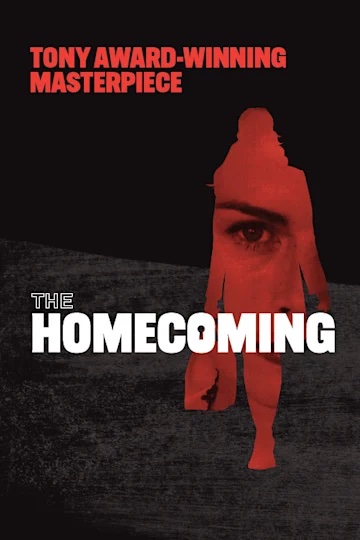
The Homecoming, directed and designed by Greg Carroll and starring Kate Kendall, Richard Piper, Ben Geurens, Peter Houghton, David Field and Eddie Orton, plays at Athenaeum Theatre 2, Melbourne, from 17 September to 3 October 2026.
Interviewed by Mary Sinanidis