I Thought You Said
Click here if you liked this article 6 
https://www.theatreworks.org.au/2026/i-thought-you-said
Date Reviewed: 27/02/2026
It’s bold and aggressive, I will say that much to begin with. Bronte Lemaire’s writing is superb and almost without reproach. This is Tip Toe Theatre’s debut play, which advertises itself as leaving no issue unturned or hypocrisy unquestioned. It certainly does so, exposing them directly to critique.
For what was a piece a little around an hour in length, the whole work felt modern yet deeply conversational. Fresh and biting but also aspirational and ambitious. The dialogue of each character travelled with a rhythm that captures how human beings actually speak to one another in modern times. It didn’t feel like text on a page.
However, I found myself desperate for a poignant moment of reflection where the characters provide some kind of remedy or solution.
They promise one another that they will do the right things just as soon as they can be comfortable enough to do so.
This may have been a conscious writing choice on behalf of Lemaire, but the intention isn’t entirely clear. The ending doesn’t so much conclude as confront; it leaves its audience sitting in the dark discomfort the characters cannot quite overcome.
Ultimately, the troubles we face now will pass. I know that seems harsh and perhaps flippant, but people who lived through the Black Death and the First World War also thought the world was ending. I thought COVID would end the world, but it didn’t. The globe kept spinning, people kept having children, and we muddled through as best we could.
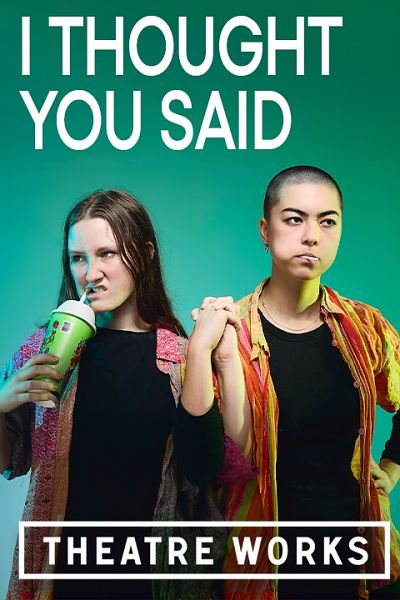
The online segments of media worked effectively to unite the disparate elements of the narrative. I enjoyed all the characters; Frankie and Sam were the perfect mix of ambiguous, specific, and unmistakably Australian to feel like an authentic, contemporary Australian play. They are a pair of well-intentioned, terminally online individuals, in tune enough with social media to have opinions — and to feel a little bad about not being able to act upon them. They are recognisable without becoming caricatures.
There is something uniquely Australian about this play. Complaining about feeling bad is a very Australian thing to do, I imagine. We also despise the tall poppy — whether that be financial, moral, or ethical:
“We get it, you go to church, you donate blood or money, mate, you do X and I do Y, great champion! Now get over yourself!”
This unique level of powerlessness, I think, is geographic. America is the land of opportunity where, with a voice and opinion loud enough, you too can become President of the USA. Europe is a land of relaxed afternoon cigarettes and overly written novels stuffed with failing marriages to very young partners. I am stereotyping to make a point.
Australia is a land set beside the world rather than fully participating in it. We think of ourselves as an easy level, an appetiser menu to the world, or perhaps a charming credit scene starring Russell Crowe or Magda Szubanski as a winking bartender. Lemaire captures this cultural shrug with sharp precision, draws attention to it, but then leaves it there for all to see rather than offering a solution or remedy. That left a slightly sour taste in my mouth, though it remained an enjoyable production.
My favourite character would have to be Alex, simply because they were so well realised as an entity onstage (no spoilers!). They were written well enough to be your friend, your family member, or your lover. They had enough specificity for the idea to hold rather than falling apart when the concept is taken off the page. The set design enhanced this beautifully. The space felt filled yet empty of other people and characters occupying it.
A recognisable domestic nowhere, fresh from Ginsberg’s A Supermarket in California.
Frankie and Sam don’t fill up the stage in the way conventional stage characters do, but they also do not shrink and retire. They simply exist onstage, working as hard as they can be bothered and bickering with one another. We all are doing this in a way, aren’t we? The production trusts stillness as much as speech, and that restraint pays off.
I Thought You Said is a red-hot piece of theatre. For people of a similar mind to Frankie and Alex, I don’t imagine you will get anything out of this show other than an enjoyable evening, but I remember scuttling out of the theatre to find an icy gin and tonic somewhere, imagining how striking this would be on a main stage, performed to a larger audience of mixed opinions. I have great ambitions for Bronte Lemaire as a playwright and hope to see their work develop for larger venues and audiences.
Reviewed by Nicolas Van Der Haar