Four Generations in One House
Click here if you liked this article 3 
https://www.palaistheatre.com.au/all-events/four-generations-in-one-house-tickets-ae1645825
Date Reviewed: 21/04/2026
There are nights at the theatre where you feel like an observer, and then there are nights where you realise you’ve quietly stepped into something that matters to an entire community. It’s on the House experienced the latter at Palais Theatre in St Kilda for the Melbourne premiere of Four Generations in One House.
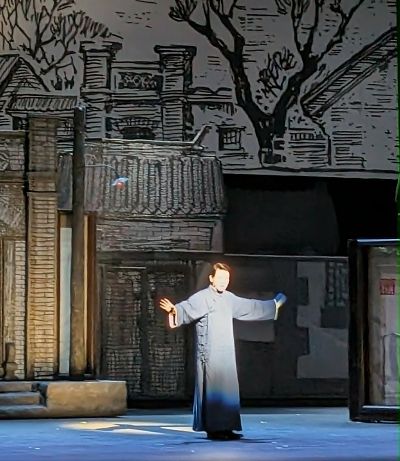
The scale hits first. The mobile set, shipped in from China, is opulent and cleverly built to feel bigger than the stage with its innovative devices flipping outdoors to indoors so seamlessly. Lighting does the heavy lifting on time and mood without fuss.
Performed by the National Theatre of China, the acting is precise. Every movement feels deliberate, and that restraint gives the emotional moments more weight.
War-time era costumes add depth without distracting. The “New Realism” approach keeps everything grounded. It feels lived-in, not staged.
Adapted from Lao She’s novel and directed by Tian Qinxin, the story follows several Beijing families living under one roof during the Japanese occupation. At the centre is the Qi family, an old, traditional household that holds onto its values at a time of change.
You see daily life under pressure: loyalty tested, survival choices, quiet acts of resistance as the war slowly wears people down. It’s really about this question: What do ordinary people do when history forces them into impossible situations? A question more relevant than it has ever been in today’s world.
Written by Lao She (the pen name of Shu Qingchun), one of China’s most important 20th century writers. What makes Lao She stand out is his human stories centred on ordinary families with flaws. It’s not just a Chinese story, but about people under pressure anywhere.
Lao She’s writing was shaped by major upheavals in China. During the Cultural Revolution in 1966, he was persecuted and died shortly after under tragic circumstances. This work is a legacy piece that has toured widely with over 400 performances in more than 70 cities since 2010. It has been seen by more than 600,000 people, and continues to land with audiences today as it did with those during Lao She’s time.
One moment stuck with me. My daughter and I were possibly the only non-Asians in the room. The woman next to us asked why we came, then told us she knew all the actors from Chinese TV. This wasn’t just a show but cultural memory on stage. We were guests, and it felt like a privilege.
It’s performed in Mandarin with English subtitles. You won’t catch every joke, and some may be Chinese to you, metaphorically and literally, but you don’t need to understand every word because the emotion carries.
This is theatre doing its job and being a bridge between cultures.
Highlights: Set design, cultural exchange, ensemble precision, lighting, Palais Theatre setting
Who’s it for? Anyone open to international theatre, people interested in history and family stories, and audiences curious about Chinese culture, history buffs. If you’re Chinese it’s a must, and if you’re not, it’s a privilege.
Reviewed by Mary Sinanidis