Anymart Japanese Film Festival 2026
Click here if you liked this article 1 
https://jffau.jpf.go.jp/film/anymart/
Date Reviewed: 14/11/2026
Reviewed by Jan-Andrew Henderson
The title says it all, really.
Konbini, or convenience stores such as 7-Eleven and FamilyMart, are everywhere in Japan and offer a cornucopia of delights. It probably sounds incredibly shallow but they’re one of my favourite things about visiting the country.
Yusuke Iwasaki’s debut feature, however, delves into the dark side of konbinis – and he is well placed to do so. Previously a TV commercial director, he wrote the script based on his own experiences as the son of a store owner. AnyMart is billed as a horror comedy but as someone who’s suffered their share of ultra-corporate environments and clueless bosses, there isn’t much to laugh about. There is, however, plenty to admire.
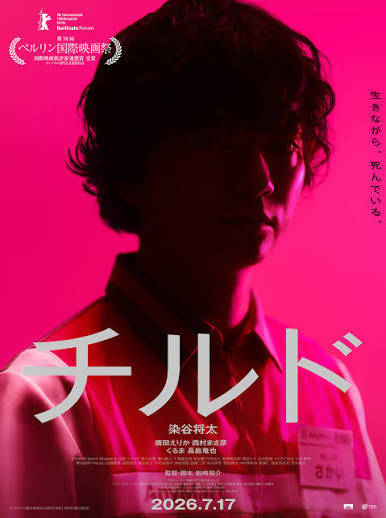
A well-deserved winner of the FIPRESCI Jury Prize at the 76th Berlin International Film Festival, AnyMart starts out as a slice-of-life retail satire - think Kevin Smith’s Clerks with a hearty dose of creeping dread. Assistant manager Sakai (Shota Sometani) sleepwalks through a job he couldn’t care less about, despite the fact that this particular branch of the AnyMart chain is owned by his dad (Masahiko Nishimura), who obsessively spys on staff using the store security cameras and inflicts heavy-handed punishment on any deviations from the rules. From the very first frames, panning along shelves of packaged processed chicken up to Sakai’s blank, pasty face, we are left in no doubt the staff share the same status as the products – generic, convenient objects. Sometani has form playing misfits and his immobile expression, resembling an over-botoxed Gaten Matarazzo, is perfect for the part. Indeed, long close-ups of faces are one of the ways Iwasaki weaves a sense of unease into this everyday setting – the rictus grins are straight out of the Smile playbook.
It all adds up to a queasy neon purgatory where honest mistakes are treated as near-satanic defiance and initiatives crushed along with common decency. From the smarmy yet pathologically insecure Anymart manager to the real estate agent desperate to discuss housing plans with the disinterested Sakai through a doorcam, everyone reeks of quiet desperation so intense it’s cringe-inducing. In this scathing critique of Japan’s deeply embedded culture of polite obedience and corporate commercial deference, the staff are more disposable than out-of-date food - a fact hammered home when one of them is forced to resign for eating expired products. There’s no danger of these people being replaced by AI. They’ve already been reduced to automatons.
Flashes of shared humour and humanity are restricted to the storeroom, smoking area or, after hours in the local restaurant. Even then ingrained repression and conditioning rears its head. “Well, we talked a lot,” Sakai says to a date as he bids her an awkward goodbye. “No, we didn’t talk at all,” she replies.
At work, the only ray of light in Sakai’s monotonous life is Ogawa (Erika Karata), a part-time worker with a lust for life and a mind of her own, who plans to open her own hair salon. It seems like she might just drag Sakai out of his lethargy, spur him to think and act for himself and maybe find romance with her. Part of me really wished that would happen but I accept that it would blunt the satire - so Iwasaki belatedly switches to full-blown horror.
The gory, bonkers, tonally shifting last act doesn’t flow naturally from what has gone before and it won’t be for everyone, especially since Anymart was finally working its way towards a sense of hard-earned hope. But it certainly ends with a bang and the message is clear enough. Any system that stifles creativity, snuffs out hope, and preaches blind obedience inevitably causes tragedy.
But I have to say, those Konbini sandwiches are epic, especially the egg mayo ones. No crusts? That’s genius.
Verdict. A biting and affecting satire.