A Tale of Autumn | Europa! Europa Film Festival
Click here if you liked this article 3 
https://www.europafilmfestival.com.au/films/a-tale-of-autumn-1998
Date Reviewed: 07/02/2026
Éric Rohmer’s A Tale of Autumn (1998), the final installment in his Tales of the Four Seasons, is often celebrated for its warmth and intellect. A great addition to the Europa! Europa Film Festival, it reunites actresses Béatrice Romand and Marie Rivière, first seen together in The Green Ray, now cast as middle-aged women. It feels as though Rohmer deliberately waited for his performers to age into the story.
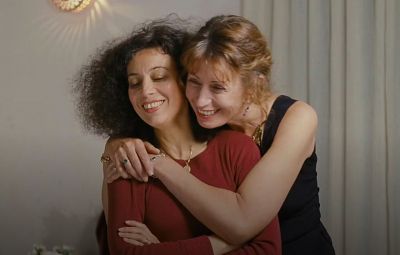
Isabelle (Rivière) and Magali (Romand) both have grown children; one is contentedly married, the other a widowed winemaker, quietly lonely. One of the film’s genuine strengths is its focus on middle-aged romance, handled with a sophistication and lack of sentimentality that few directors manage.
Yet despite being cited by critics as the strongest entry in the Four Seasons series, A Tale of Autumn feels decidedly dated. Contemplative to the point of inertia, it initially plays like an endurance test; watching paint dry, albeit paint with ideas. The opening stretch is particularly arid: the first 15 minutes are static and uninviting, a cinema of subtraction. It is as though we are being asked as viewers to clear our palates before the real story begins. Only later, when the matchmaking schemes collide in an almost Shakespearean comedy of errors, do philosophical tensions surface.
Rohmer’s devotion to dialogue over action dominates. Handheld shots, sparse settings, and flat direction give the film an almost student-film quality—competent, but rarely inspired. However, this "plainness" serves a radical purpose: by stripping away visual artifice, Rohmer refuses to manipulate the viewer, forcing us to look at the characters' souls rather than the scenery. The countryside, though thematically central, is underused visually, never quite becoming the cinematic presence it promises to be.
The dialogue, Rohmer’s signature strength, is also his weakness here. While flashes of insight land effectively, much of the speech feels mannered.
An unexpected pleasure is the attention paid to winemaking. Magali’s artisanal philosophy, her refusal to use industrial shortcuts and her respect for the slow, seasonal crawl of the land becomes a perfect metaphor for Rohmer’s own filmmaking. Both are patient, stubborn, and deeply suspicious of "sweetened" results.
Ultimately, A Tale of Autumn is a film of ideas rather than images. It suggests that the "inertia" of middle age is not a lack of life, but a shift in its rhythm, where meaning is found in the "walk and talk" rather than the plot point. It remains an important waypoint in cinema history, proving its legacy not through visual innovation, but by showing how far conversation alone can carry a film.
Highlights
- A rare, unsentimental PG-rated look at middle-aged desire
- Philosophical conversations that reward attentive viewers
- Insightful depictions of winemaking and respect for the land
- A foundational example of the “walk and talk” film
Who’s it for?
- Viewers who enjoy dialogue-driven, contemplative cinema
- Fans of Éric Rohmer, Richard Linklater or Hong Sang-soo
- Audiences interested in relationships beyond youth narratives
- Those willing to trade pace for ideas
- Those who find beauty in craft, whether it is the meticulous process of winemaking or the uncompromising style of the legendary director
- Advice: Skip the popcorn, this one is to be watched while savouring good wine.
A Tale of Autumn screens as part of the Europa! Europa Film Festival, an annual celebration of European cinema. This year’s program features 43 films from 22 countries and runs from February 19 to March 19, with screenings in Melbourne, Sydney, Brisbane, Hobart and Auckland.
Reviewed by Mary Sinanidis